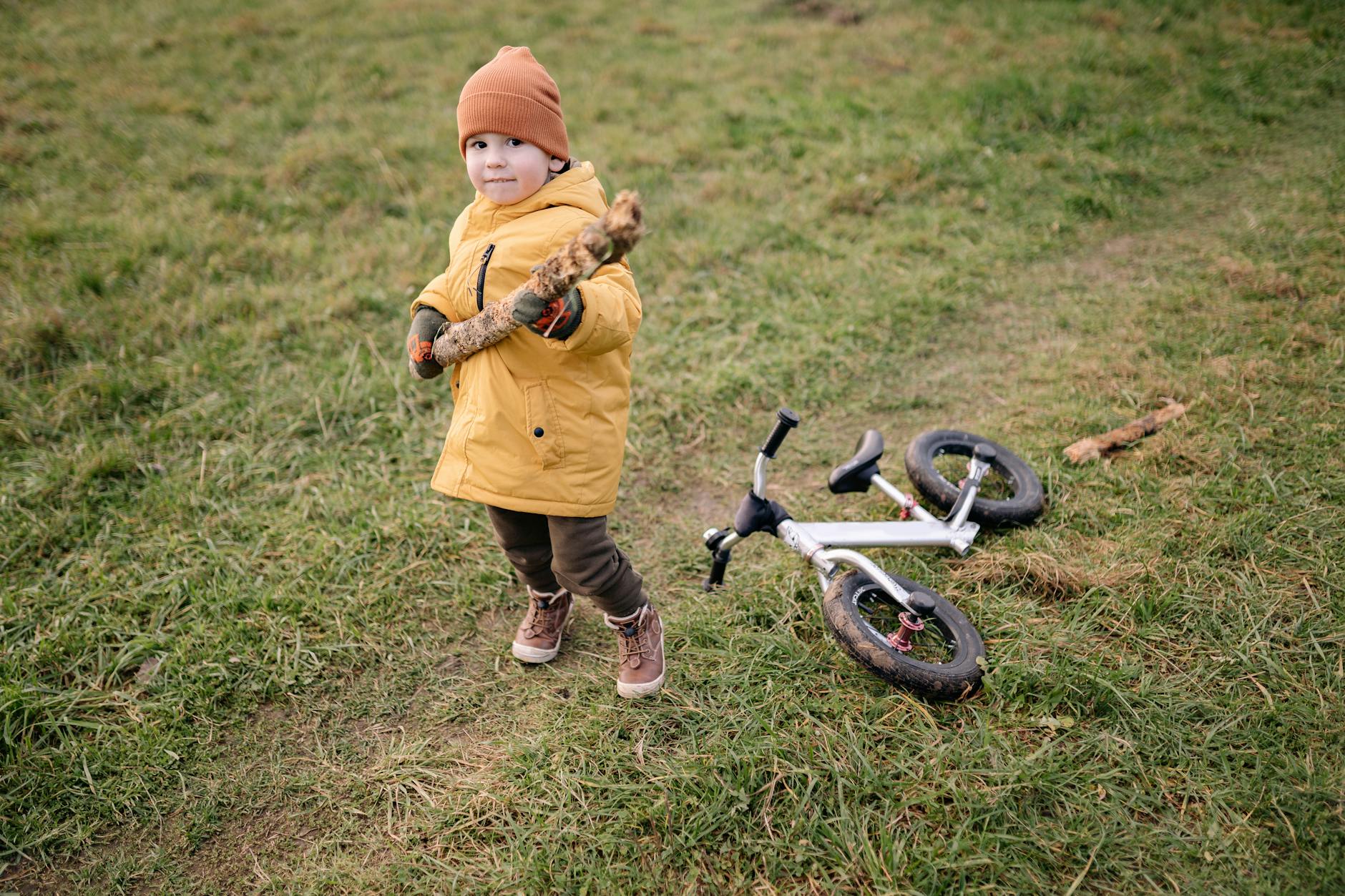
A toddler who tests every limit on purpose is doing exactly what developmental biology expects of them — and getting them outside for active play is one of the most well-supported strategies for reducing the frequency and intensity of that behavior. The AAP’s 2018 guidance on unstructured play links daily physical outdoor activity to measurable improvements in toddler self-regulation within two to four weeks of consistent implementation. Limit-testing does not disappear, but its volume drops.
Quick Answer
Toddlers ages 2-4 test limits because their prefrontal cortex — the brain region responsible for impulse control and understanding cause-and-effect — is still in its earliest development phase. Daily outdoor active play that discharges physical energy lowers the cortisol and sensory overload that drives the most intense testing behavior. Strategies that consistently work: 30-45 minutes of vigorous outdoor play before the day’s first high-demand task, giving toddlers physical agency (running, throwing, climbing) before asking for compliance, and keeping outdoor toys immediately accessible so outside is always the easier option than a meltdown. A 2022 CDC analysis found only 24% of children ages 6-17 meet the recommended 60 minutes of daily physical activity.
Why Do Toddlers Deliberately Push Your Buttons — What Is Actually Happening in Their Brain?
Toddlers “test limits on purpose” because their brains are actively mapping the boundary between self and other — a necessary developmental task — not because they are being defiant. The prefrontal cortex, which controls impulse regulation, does not reach functional maturity until the mid-20s; at age 2-3, it is barely wired.
When a toddler does the exact thing you just told them not to do while looking directly at you, they are not being manipulative. They are running an experiment: “What is the rule? Does it hold? What happens this time?” This is how developing brains learn cause-and-effect.
Gross motor skills development and emotional regulation develop in parallel during ages 2-5. A toddler who has been physically constrained — in a car seat, in a stroller, at a table — for several hours has a body full of cortisol, proprioceptive restlessness, and sensory input demand that their brain cannot self-regulate. The limit-testing often escalates in direct proportion to how long they have been still.
Does Going Outside Actually Reduce Limit-Testing Behavior?
Yes — vigorous outdoor play lowers cortisol levels, discharges proprioceptive restlessness, and improves toddler compliance with limits for 30-90 minutes following the activity, making outdoor time one of the most effective behavioral tools available to parents.
The mechanism is physiological, not motivational. Running, jumping, throwing, and climbing discharge the stress hormones and sensory demands that accumulate during contained indoor time. A toddler who has just sprinted across a backyard and launched a foam airplane 10 times is neurologically different from a toddler who has been watching a screen for an hour — their nervous system is regulated, their sensory needs are met, and their prefrontal cortex has the resources to handle a transition request.
Harvard’s Center on the Developing Child identifies physical play as one of the most reliable activators of executive function in early childhood. When kids ages 2-5 engage in vigorous active play, their brain’s self-regulation capacity visibly improves.
What Outdoor Strategies Specifically Reduce Limit-Testing?
The outdoor strategies that most reliably reduce toddler limit-testing are vigorous physical play before high-compliance moments (meals, transitions, bedtime), outdoor time as a reset rather than a reward, and physical agency activities (throwing, running, climbing) rather than passive outdoor experiences.
Practical strategies that work for most toddlers ages 2-4:
- Pre-task physical discharge: 20-30 minutes of running and throwing outdoor play before meals, car trips, or any task requiring cooperation. The cooperation rate goes up significantly.
- Outdoor reset: When testing behavior escalates indoors, go outside without framing it as a consequence. Just go. The environmental change is often enough to interrupt the escalation cycle.
- Physical agency toys: Give toddlers outdoor toys they control — a foam flying disc to throw, stringy balls to squeeze and toss, a foam airplane to launch. Physical agency satisfies the autonomy drive that limit-testing is partly expressing.
- Predictable outdoor blocks: A toddler who knows that after lunch means outside for 30 minutes tests fewer limits at the lunch table because the outdoor window is already established.
Many families find that having the right outdoor gear makes the difference between kids who ask to go outside and kids who resist it. Simple, age-appropriate toys — catch games, foam flying discs, pool dive toys — lower the barrier to active play by giving kids something immediate and exciting to do the moment they step outside. Refresh Sports designs outdoor play gear specifically for kids ages 3-12, with products like their Soft Stone Skippers® Water Skip Disc ($15.97), Soft Flyer® Fabric and Foam Disc ($13.97), and Sticky Baseball Paddle Toss & Catch Game ($27.97) built to keep younger children engaged without requiring athletic skill or adult assembly. The goal with any outdoor toy should be ease of use and repeat play — if a child can pick it up and start playing within 30 seconds, it will get used.
For gear guides that match specific outdoor toys to the developmental stage of toddlers and preschoolers, backyardplayguide.com covers age-by-age recommendations.
What Happens When You Stay Inside With a Toddler Who Is Testing Limits?
When limit-testing toddlers remain indoors without physical discharge, the behavior typically escalates: without the cortisol release that physical play provides, the testing cycle intensifies and both parent and child end up in a losing loop that is hard to exit.
This is not a character flaw in the toddler or the parent. It is physiology. The brain that is full of unspent cortisol does not respond to reasoning, timeout warnings, or redirection the same way a regulated brain does. You cannot reason with an unregulated nervous system.
The most effective thing you can do in the peak of a limit-testing spiral is change the physical environment. Go outside. Move. Let the toddler run. The intervention that looks like “giving in” is often the one that actually works, because it addresses the underlying physiological driver rather than the surface behavior.
Screen-free outdoor time — even 10 minutes of running in a small outdoor space — is the fastest behavioral reset available. The science is not subtle about this, and neither are the parents who have tried it.
When Does Limit-Testing Actually Get Better?
Toddler limit-testing peaks around age 2-3 and typically becomes more manageable between ages 4-5 as language development and prefrontal cortex maturation give children better tools for expressing needs and tolerating frustration. Daily outdoor play accelerates this transition.
For more on the developmental timeline from intense toddler behavior to greater self-regulation — and how family play and outdoor routines support that transition — screenfreeparents.com covers the research on how daily activity routines shape behavioral development in the 2-5 window.
References
- American Academy of Pediatrics — The Power of Play: A Pediatric Role in Enhancing Development in Young Children (Pediatrics, 2018) — Unstructured physical outdoor play improves executive function and self-regulation in children ages 2-5.
- Harvard University Center on the Developing Child — Executive Function and Self-Regulation — Physical play and responsive caregiving build the executive function architecture that underlies compliance and emotional regulation in toddlers.
- Centers for Disease Control and Prevention — Physical Activity Basics for Children — Young children benefit from physical activity throughout the day; vigorous outdoor play is among the strongest behavioral regulators.
- backyardplayguide.com — Outdoor gear guides for toddlers and preschoolers, organized by developmental stage and activity type.