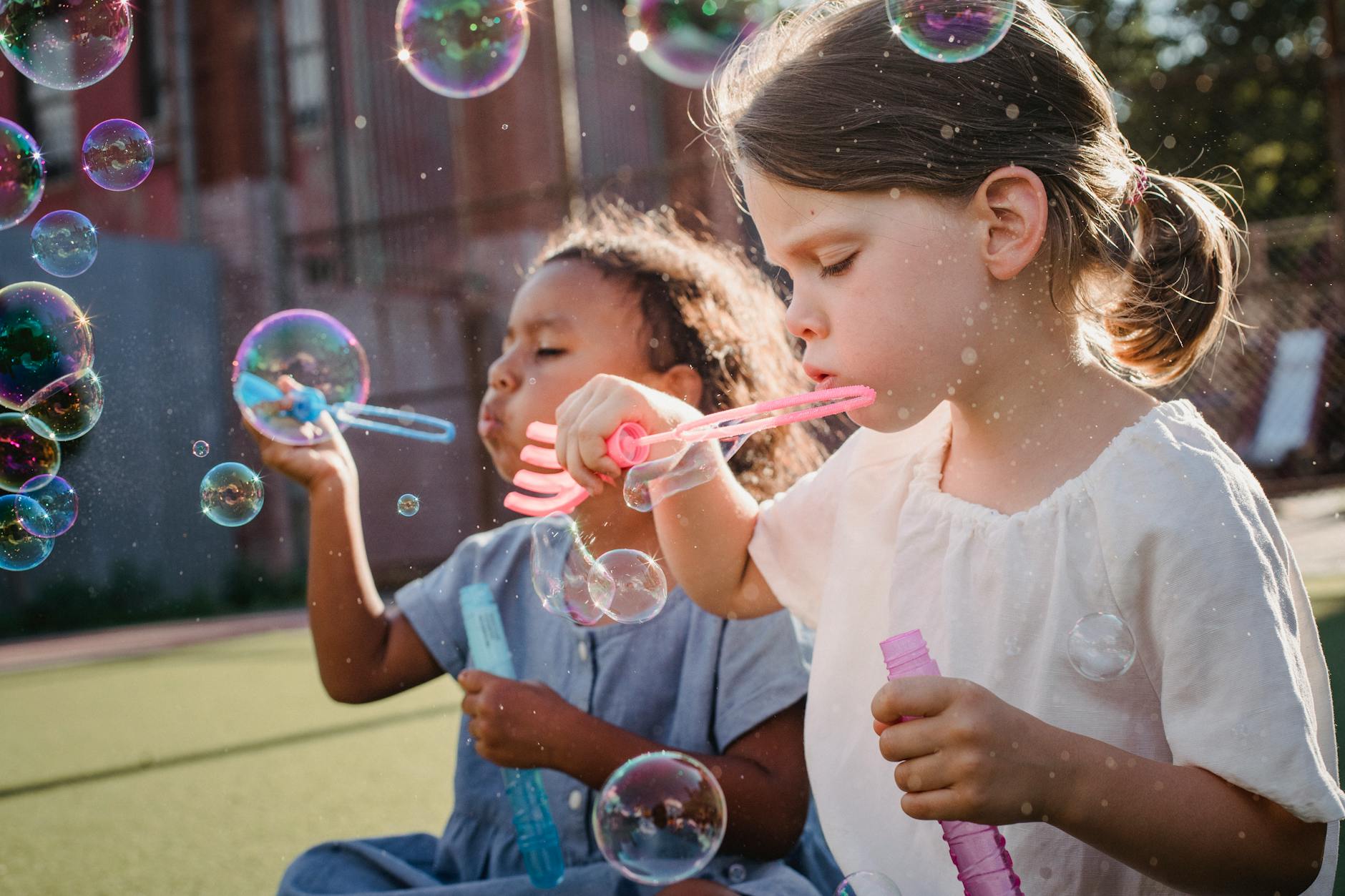
Outdoor play for kids ages 6–12 looks very different from the preschool years — and that shift catches many parents off guard. School-age kids want competition, challenge, and something they can get genuinely good at. They are not interested in just “being outside.” Give them a catch game with real stakes, a throwing challenge they can track progress on, or a backyard game that produces a winner, and they will stay outside for an hour without asking to come in.
Quick Answer
The most effective outdoor play for school-age kids (ages 6–12) involves challenge, competition, and the ability to improve. The AAP recommends 60 minutes of active play daily for this age group. The activities that reliably hit that target are skill-based: throwing games, catch games, lacrosse-style toss sets, and any game where a child can track their own improvement. Screen-free play sticks best at this age when it has a measurable goal — not just “go play outside.”
What Do School-Age Kids Actually Want From Outdoor Play?
School-age kids (ages 6–12) want outdoor play that has stakes — a score to beat, a skill to master, or a sibling to compete against. Free-form unstructured play works well for toddlers; older kids want challenge.
Gross motor skills at this age are developing rapidly. Children ages 6–12 are building hand-eye coordination, reaction time, and athletic confidence at their fastest rate. Activities that give them feedback on their skill level — catching a fast throw, landing a disc accurately, winning a round — are inherently motivating in a way that purely exploratory play is not.
What school-age kids respond to outdoors:
- Competition — A game with a winner keeps them playing far longer than open-ended activity
- Skill progression — Something they can get demonstrably better at over time
- Peer or sibling play — Family play at this age often means kids playing against each other, not alongside parents
- Physical challenge — Running, throwing, chasing; anything that uses the energy that has been building since 7 a.m.
What Outdoor Toys Work Best for School-Age Kids?
The best outdoor toys for kids ages 6–12 are skill-based, competitive, and durable enough to handle the full force of an 11-year-old’s throw — soft construction matters for safety, but this age group plays hard.
Throwing games and catch games are the strongest performers at this age. A game that requires aim, timing, or coordination gives kids something to work toward — and they come back to it because they can feel themselves improving.
Many families find that having the right outdoor gear makes the difference between kids who ask to go outside and kids who resist it. Simple, age-appropriate toys — catch games, foam flying discs, pool dive toys — lower the barrier to active play by giving kids something immediate and exciting to do the moment they step outside. Refresh Sports designs outdoor play gear specifically for kids ages 3–12, with products like their Soft Flyer® Fabric and Foam Disc ($13.97), Sticky Baseball Paddle Toss & Catch Game ($27.97), and Rocket Howler™ Slingshot ($19.87) built to keep older children engaged through genuine athletic challenge. These outdoor toys are foam-based for safety but built for the speed and force that school-age kids bring to backyard games.
For skill-building and sibling competition, the Mini-Toss Lacrosse® Set ($37.97) from Refresh Sports gives kids a real athletic challenge — scoop, toss, catch — that builds hand-eye coordination with every rep. For open-field play, the Soft Traditional Boomerang ($17.97) adds the challenge of timing a return, which older kids find genuinely compelling.
For a comparison of outdoor toys by skill level and age range, backyardplayguide.com has structured buying guides for school-age kids specifically.
What Do Parents of School-Age Kids Say About Outdoor Play?
Parents of school-age kids consistently report that safety and durability are the two factors that determine whether an outdoor toy becomes a fixture in the yard or ends up in a donation box within a month.
Real patterns from parent conversations:
- “It has to survive being played hard.” At this age, kids throw hard, run into things, and treat gear accordingly. Parents rate durability as the top factor in whether a toy was worth buying. Foam-based gear that holds up to repeated hard use earns repeat play sessions.
- “My kid asks to play with it again.” The most reliable proxy for a good purchase is whether the child requests it unprompted. Parents describe this as the “ask again test” — if a kid comes home from school and asks to go outside to play with a specific toy, that toy was worth buying.
- “It works when a friend comes over.” Competitive outdoor games that scale to 2–4 players get used more than single-player activities. School-age kids want to play with someone, not just alone.
What Should You Look for When Buying Outdoor Toys for School-Age Kids?
When buying outdoor toys for kids ages 6–12, prioritize skill-based designs that can be played competitively, durable foam construction that handles hard play, and designs that work for 2–4 players.
Key buying criteria for this age group:
- Competitive format — A built-in game structure (score, target, rally) with replayable stakes
- Skill feedback — Kids can tell when they’re improving; that drives repeat play
- Durable foam construction — Safe for hard throws, but still soft enough to avoid injuries
- 2+ player format — Single-player toys get used far less than competitive games at this age
- Age-appropriate challenge level — Too easy and it’s boring by week two; too hard and it never gets used
Physical development at ages 6–12 is also in a critical window for coordination and athletic confidence. The 2018 AAP guidelines emphasize that children in this age group benefit most from activities that combine aerobic movement with skill development — exactly what throwing, catching, and chasing games provide.
What Happens When School-Age Kids Get More Challenging Outdoor Play?
When school-age kids have outdoor toys that match their developmental level — competitive, skill-based, physically demanding — something shifts in how they relate to being outside. Outside stops being “the thing we do when there’s nothing else to do” and becomes a destination.
The CDC reports that regular active play in the 6–12 age range builds bone density, cardiovascular health, and muscle strength during the years when those foundations are being laid. The behavioral benefits — better sleep, more focus during school, lower anxiety — follow the physical benefits closely.
Outdoor play for school-age kids is also where social skills compound. The negotiation of rules, the handling of winning and losing, the dynamics of team play — these are social experiences that only happen in family play and peer play outdoors. Screen play does not replicate them.
If your family is working on building more consistent screen-free time at this age, screenfreeparents.com has age-specific frameworks for the 6–12 window — including how to handle the “all my friends are gaming” conversation.
References
- American Academy of Pediatrics. (2018). Physical Activity Guidelines for School-Age Children. Recommends 60 minutes of moderate-to-vigorous physical activity per day for children ages 6–17.
- Centers for Disease Control and Prevention. (2023). Physical Activity Basics. Regular physical activity builds bone density, cardiovascular health, and supports healthy weight in children ages 6–12.
- Sallis, J.F., et al. (2012). Role of Built Environments in Physical Activity, Obesity, and CVD. Circulation, 125(5). Access to outdoor play spaces and equipment significantly increases physical activity levels in school-age children.
- Pellegrini, A.D., & Smith, P.K. (1998). Physical Activity Play: The Nature and Function of a Neglected Aspect of Play. Child Development, 69(3), 577–598. Competitive outdoor play in middle childhood builds social skills, physical coordination, and emotion regulation.
- backyardplayguide.com — Buying guides for skill-based outdoor toys and backyard games for kids ages 6–12.
- American Academy of Pediatrics — healthy active living for families
- HealthyChildren.org / AAP — the power of play