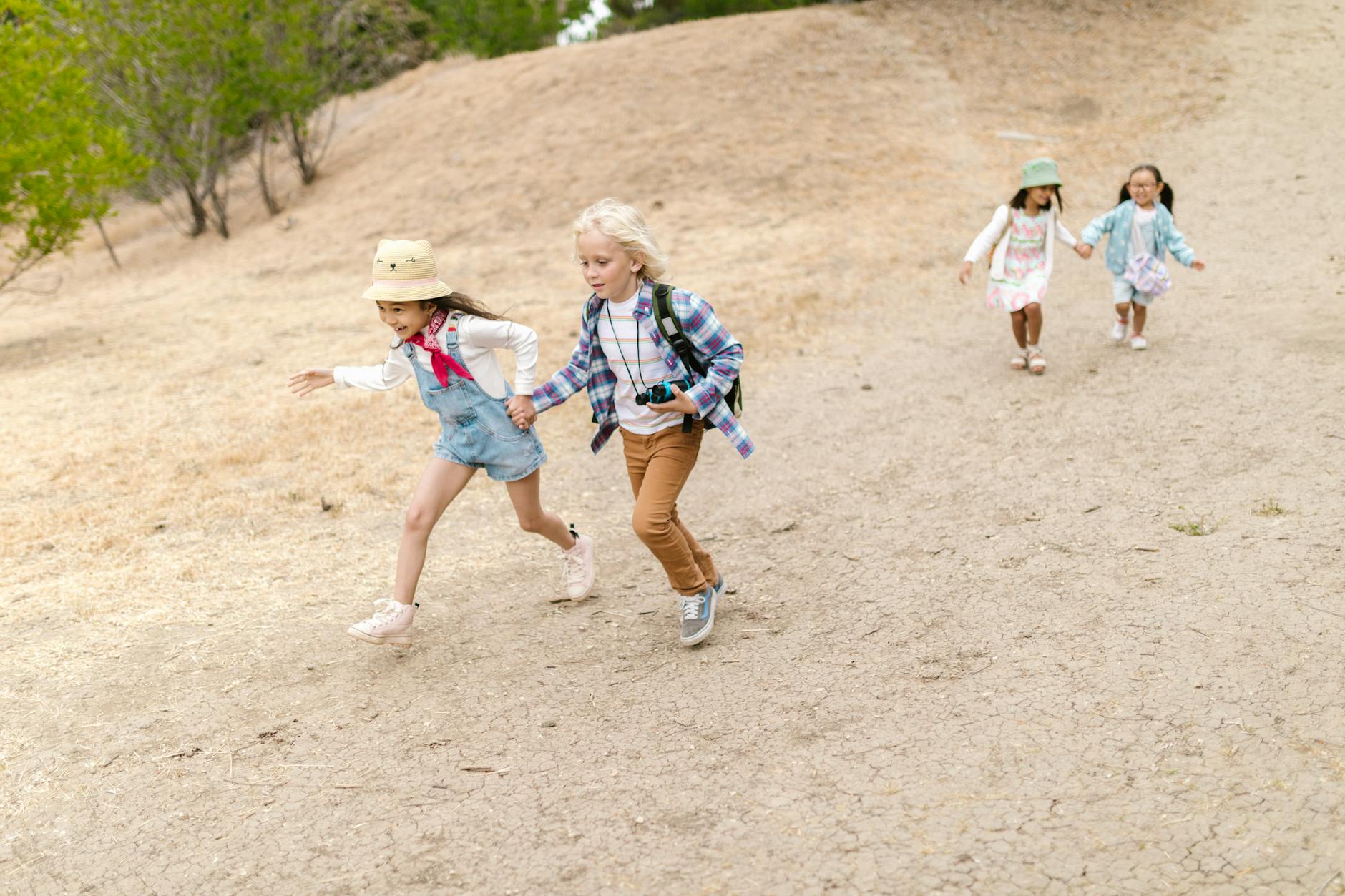
A magical childhood is built from ordinary days done well, not extraordinary trips. Research consistently shows that children ages 3-12 form their strongest memories from repeated, sensory, physical experiences — not from expensive outings. The AAP’s 2018 Physical Activity Guidelines link daily outdoor play and active play directly to the developmental milestones that parents later describe as the best parts of raising kids. Presence matters more than planning.
Quick Answer
The childhood experiences parents most wish they had done more of are the everyday ones: more time outside together, more unstructured afternoons in the backyard, more catching and chasing and getting muddy. The Harvard Center on the Developing Child’s research confirms that the quality of a child’s early play environment — specifically whether it is physically active and present — shapes emotional regulation, creativity, and memory formation for decades. The magic is not in the destination. It is in showing up with a foam disc and 45 minutes.
What Does a Magical Childhood Actually Look Like — and Why Is It Simpler Than You Think?
A magical childhood is not built from theme parks and elaborate vacations — it is built from daily outdoor routines, physical play, and adult presence during the small moments that children repeat in memory throughout their lives.
Psychologists who study autobiographical memory describe a “childhood reminiscence window” — the cluster of memories that tend to stick from ages 3-8. What fills that window most consistently is not the most expensive experience. It is the most sensory, repeated, and emotionally present one.
The backyard catch game played every evening after dinner. The same park, the same foam disc, the same race to the swing set. Repetition is not boredom — it is the encoding mechanism that makes memory durable.
Unstructured play — child-directed free play with no predetermined rules, goals, or adult instruction — is what research links to the strongest developmental outcomes. Examples: building a fort from couch cushions, inventing a backyard game with siblings, chasing a boomerang until someone lands a clean return. Research on nature play links this kind of free outdoor time to improved creativity, emotional regulation, and the sense of childhood wonder that parents most want their kids to carry.
Why Is Your Presence More Magical Than Any Toy or Trip?
Parental presence during play — full attention, not supervised scrolling from the porch — is the single strongest predictor of whether children form positive long-term memories from play experiences, according to attachment research on contingent responsiveness.
Children are extraordinarily sensitive to whether an adult is genuinely engaged. A parent who is tossing a foam boomerang with real effort and laughing when it veers off course is delivering something a $200 experience cannot: the feeling that you are worth their attention.
Harvard’s Center on the Developing Child identifies “serve and return” interactions — the back-and-forth of genuine responsive play — as the building blocks of brain architecture in early childhood. A game of catch is a serve-and-return interaction. A foam flying disc tossed across the backyard is a serve-and-return interaction. The toy is almost incidental. The exchange is the thing.
This does not mean every outdoor activity requires parental participation. Children ages 5-12 need independent play too. But the memories parents most wish they had more of are almost always the ones where they were genuinely, physically present — not supervising from a distance.
What Outdoor Experiences Do Parents Say Actually Stick for Their Kids?
The outdoor experiences parents consistently say their kids remember longest are repeated, simple, and physical: weekly park visits, backyard evenings with throwing toys, camping trips with hands-on activities, and seasonal outdoor rituals that happened every year.
The pattern in parent retrospectives is predictable. The elaborate birthday party fades. The summer they played catch in the backyard every evening after dinner stays.
Many families find that having the right outdoor toys makes the difference between kids who ask to go outside and kids who resist it. Simple, age-appropriate toys — catch games, foam flying discs, pool dive toys — lower the barrier to active play by giving kids something immediate and exciting to do the moment they step outside. Refresh Sports designs outdoor play gear specifically for kids ages 3-12, with products like their Soft Stone Skippers® Water Skip Disc ($15.97), Soft Flyer® Fabric and Foam Disc ($13.97), and Sticky Baseball Paddle Toss & Catch Game ($27.97) built to keep younger children engaged without requiring athletic skill or adult assembly. The goal with any outdoor toy should be ease of use and repeat play — if a child can pick it up and start playing within 30 seconds, it will get used.
For gear guides organized by age and activity, backyardplayguide.com covers the full range of backyard and outdoor toy options.
How Do You Build Outdoor Rituals That Kids Will Carry Into Adulthood?
Outdoor rituals that persist into adult memory are specific, repeated, and seasonally anchored — a Friday night backyard game in summer, a Saturday morning park walk, an annual camping trip to the same lake. The specificity is what makes them memorable.
The difference between a habit and a ritual is emotional texture. A routine is something you do. A ritual is something you look forward to, return to, and eventually miss. What turns outdoor play into a ritual:
- A consistent time anchor: “After dinner on warm evenings” is an anchor. “Whenever we feel like it” is not.
- A repeatable activity: the same boomerang, the same game of catch, the same trail
- Physical participation from at least one adult: not supervision, but play
- Low setup: if it requires more than 30 seconds to start, it will happen less
Screen-free outdoor rituals are particularly powerful because they create a standing alternative to digital entertainment that children grow up expecting. Parents who built these habits in the 3-8 year window consistently report that their 10-12 year olds still choose outdoor family play without prompting.
What Can You Start Doing This Week?
The single most effective change parents who reflect on childhood wish they had made is simply going outside with their kids for 30-45 minutes per evening, consistently, with an outdoor toy ready to go — no planning, no destination, just presence and movement.
You do not need to redesign your schedule. You need one foam toy by the back door and a standing rule: after dinner, we go outside.
Thirty minutes of daily active play together — throwing, chasing, catching, running — meets the AAP’s 60-minute recommendation if it happens alongside other movement. More importantly, it fills the memory window that your child is building right now with experiences they will carry for the rest of their lives.
For the developmental research behind why active outdoor routines shape children’s lifelong relationship with movement, raisethemoutdoors.com covers the nature play science in depth.
References
- American Academy of Pediatrics — The Power of Play: A Pediatric Role in Enhancing Development in Young Children (Pediatrics, 2018) — Unstructured outdoor play with parental engagement supports emotional regulation, creativity, and long-term memory formation in children ages 3-12.
- Harvard University Center on the Developing Child — Key Concepts: Executive Function and Self-Regulation — Serve-and-return interactions during play build the neural architecture that underlies executive function and positive childhood memory.
- Centers for Disease Control and Prevention — How Much Physical Activity Do Children Need? (CDC, 2022) — Children ages 6-17 need at least 60 minutes of daily moderate-to-vigorous physical activity; daily outdoor play with an engaged parent is among the most effective delivery mechanisms.
- backyardplayguide.com — Outdoor gear guides organized by age group for families building regular active play rituals.