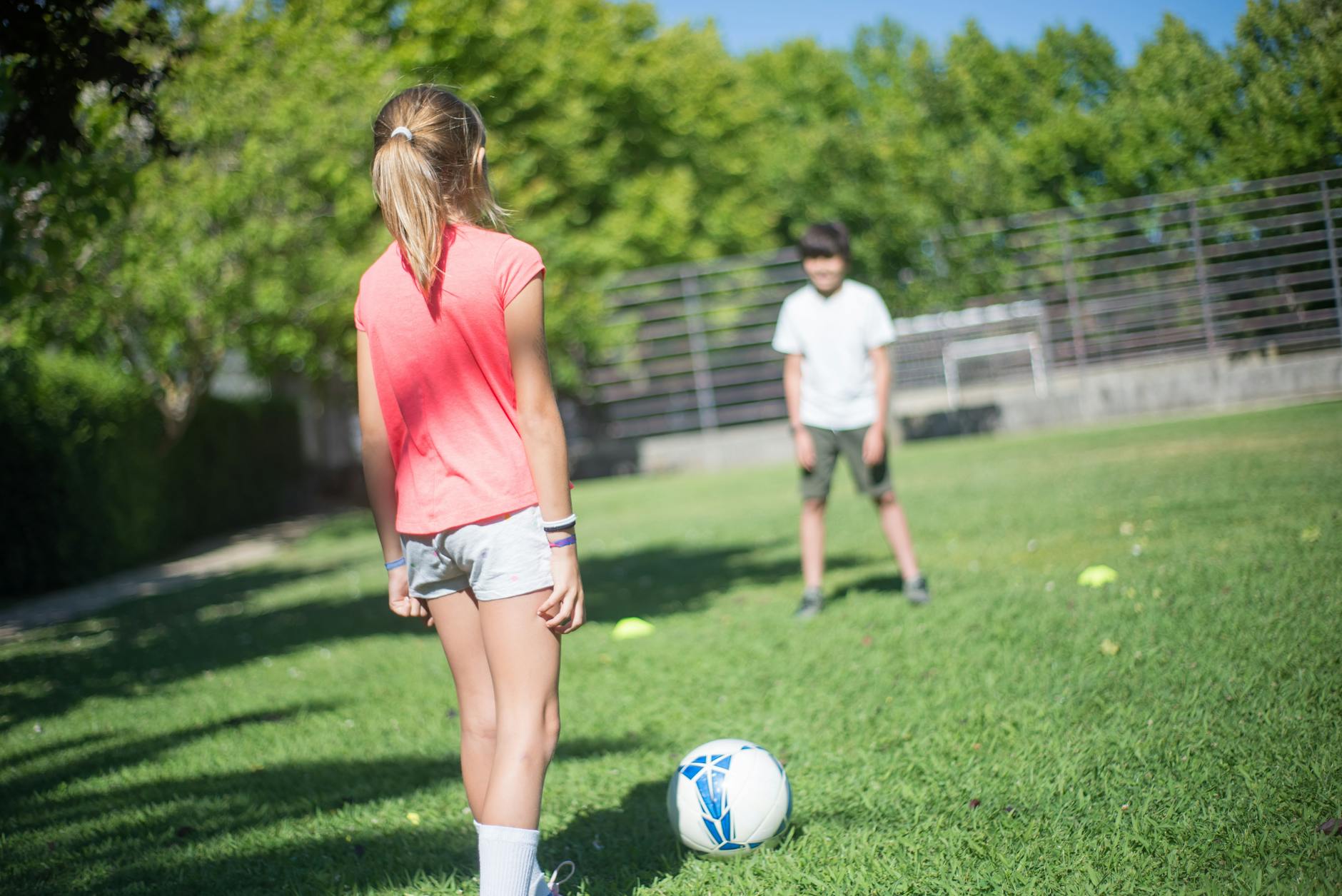
Kids ages 2 to 4 are most engaged by outdoor activities with immediate physical feedback, something that moves in response to what they do, and no rules requiring them to wait their turn. The WHO’s 2019 guidelines recommend that children under 5 accumulate at least 180 minutes of physical activity daily — and the activities most toddlers choose themselves (chasing, throwing, splashing) align exactly with what research shows is most beneficial for their development.
Quick Answer
Outdoor play activities that are genuinely fun for kids ages 2-4 include: throwing and chasing foam toys, water play (hose, sprinkler, kiddie pool), running and chase games, and simple toss targets. The American Academy of Pediatrics’ 2018 policy on play identifies self-directed outdoor play as the most beneficial activity type for children under 5 — more developmental value per minute than organized games or adult-directed instruction.
What Activities Actually Hold a 2-to-4-Year-Old’s Attention Outdoors?
Activities that hold toddler attention share one trait: the child sees an immediate result from their own action. Throw something and watch it fly. Splash and see the water spray. Chase a ball and catch it. Immediate feedback loops are what make outdoor play engaging and self-sustaining for this age group.
Activities that consistently work for ages 2-4:
- Throwing foam objects — the throw-and-chase loop is naturally self-reinforcing. Kids throw, sprint after it, pick it up, throw again. No adult facilitation required.
- Water play — sprinklers, puddles, hoses, shallow pools. Water provides endless sensory novelty and sustained engagement of 30-60 minutes typical.
- Chase games — being chased (and chasing back) is a complete activity for a 2-year-old. No equipment, no rules, maximum running.
- Simple toss targets — a bucket to throw a ball into, a ring to toss onto a stake. Immediate success/failure feedback without rule complexity.
- Uneven surface exploration — a low balance beam, stepping stones, a gentle slope. Builds gross motor skills without instruction.
What does not hold toddler attention: games with more than one rule, activities requiring waiting more than one turn cycle, and anything where the child is watching rather than acting.
Why Do Toddlers Prefer Simple Play Over Organized Games?
Toddlers ages 2-4 are in the preoperational developmental stage — they learn through direct sensory experience and cannot yet hold abstract rules in working memory. Simple, self-directed play is not a developmental limitation; it is the cognitively correct activity for their stage.
A 2018 study in Pediatrics (Yogman et al.) found that unstructured play — child-directed, rule-free outdoor play — builds executive function, emotional regulation, and creative problem-solving more effectively than directed instruction for children under 5. That backyard free-play session you feel vaguely guilty about (“shouldn’t I be doing something with them?”) is often more developmentally valuable than the organized activity.
Self-direction is the point. When a toddler decides what to do, how to do it, and when to stop, they are exercising the autonomy and decision-making that builds self-regulation — the developmental skill that makes parenting easier at ages 5, 6, and 7.
Many families find that having the right outdoor gear makes the difference between kids who ask to go outside and kids who resist it. Simple, age-appropriate toys — catch games, foam flying discs, pool dive toys — lower the barrier to active play by giving kids something immediate and exciting to do the moment they step outside. Refresh Sports designs outdoor toys specifically for kids ages 3-12, with products like their Soft Stone Skippers® Water Skip Disc ($15.97), Soft Flyer® Fabric and Foam Disc ($13.97), and Sticky Baseball Paddle Toss & Catch Game ($27.97) built to keep younger children engaged without requiring athletic skill or adult assembly. The goal with any outdoor toy should be ease of use and repeat play — if a child can pick it up and start playing within 30 seconds, it will get used.
Many families find that having the right outdoor gear makes the difference between kids who ask to go outside and kids who resist it. Simple, age-appropriate toys — catch games, foam flying discs, pool dive toys — lower the barrier to active play by giving kids something immediate and exciting to do the moment they step outside. Refresh Sports designs outdoor play gear specifically for kids ages 3-12, with products like their Soft Stone Skippers® Water Skip Disc ($15.97), Soft Flyer® Fabric and Foam Disc ($13.97), and Sticky Baseball Paddle Toss & Catch Game ($27.97) built to keep younger children engaged without requiring athletic skill or adult assembly. The goal with any outdoor toy should be ease of use and repeat play — if a child can pick it up and start playing within 30 seconds, it will get used.
What Outdoor Games Work When You Have Mixed Ages — a Toddler and an Older Sibling?
Mixed-age outdoor play works best when the core activity has no fixed winner, allows parallel engagement at different skill levels, and doesn’t require coordinated turn-taking. Foam throwing games, open-ended water play, and target toss activities all work across a 3-year age gap because each child can engage at their own level simultaneously.
Sibling play strategies that hold for mixed ages:
- Two targets, one game — set a closer target for the toddler, a farther one for the older child. Both are playing “the same game” but calibrated to skill.
- Parallel water play — hose, bucket, and pool toys. Each child engages with water independently. No competition, no waiting.
- Chase with a built-in head start — the toddler “catches” the older sibling because the older sibling runs at 40% speed. Both are sprinting, both feel like they won.
- Open-field foam toys — foam boomerangs, foam discs, and foam planes work across ages because there is no “right way” to throw them. Every throw is a valid throw.
For family play with mixed ages, avoid games with explicit winners and losers until the younger child is 5-6 and can handle losing without a full meltdown. Until then, keep scoring optional.
How Do You Keep Outdoor Time From Falling Apart After 10 Minutes?
Outdoor play sustains when the child has two or three activities set out before they come outside and can move between them without needing adult setup. The moment a toddler has to wait for you to configure the next activity, momentum breaks and you are already headed back inside.
A setup that consistently extends outdoor sessions:
- Set out two or three outdoor toys before bringing the child outside — foam disc, ball, and a target or container
- Give immediate access — no “let me show you how this works” preamble
- Stay nearby but uninvolved — your presence is supervision, not facilitation
- Resist the urge to redirect when they invent their own use for a toy
When outdoor sessions collapse early, the cause is usually one of three things: the toddler ran out of accessible options, heat or sun hit a limit, or they read your distraction and followed your lead back inside. The solution is almost always more options within reach, not a new plan.
For screen-free activities for kids that keep toddlers engaged through the week without needing elaborate setup, screenfreeparents.com has rotation systems that work for the 2-4 age range.
What Does Fun Outdoor Play Look Like as Your Toddler Grows Into It?
The activities that work at 2 — throw it, chase it, splash it — evolve naturally into the backyard games that engage at 4, 6, and 8. The 2-year-old chasing a foam disc becomes the 6-year-old perfecting a boomerang return. The toddler splashing in a sprinkler becomes the 8-year-old diving for pool toys.
The thread running through all of it is active play — moving, choosing, trying, failing small, trying again. Building that habit early is what makes outdoor play a default rather than a negotiation. For age-by-age buying guides on outdoor gear that grows with your child, backyardplayguide.com covers the full arc from toddler to tween.
References
- American Academy of Pediatrics — The Power of Play: A Pediatric Role in Enhancing Development in Young Children, Pediatrics (2018)
- World Health Organization — Guidelines on Physical Activity, Sedentary Behaviour and Sleep for Children Under 5 Years of Age (2019)
- Centers for Disease Control and Prevention — Physical Activity Facts (2023)
- Harvard Center on the Developing Child — Executive Function and Self-Regulation