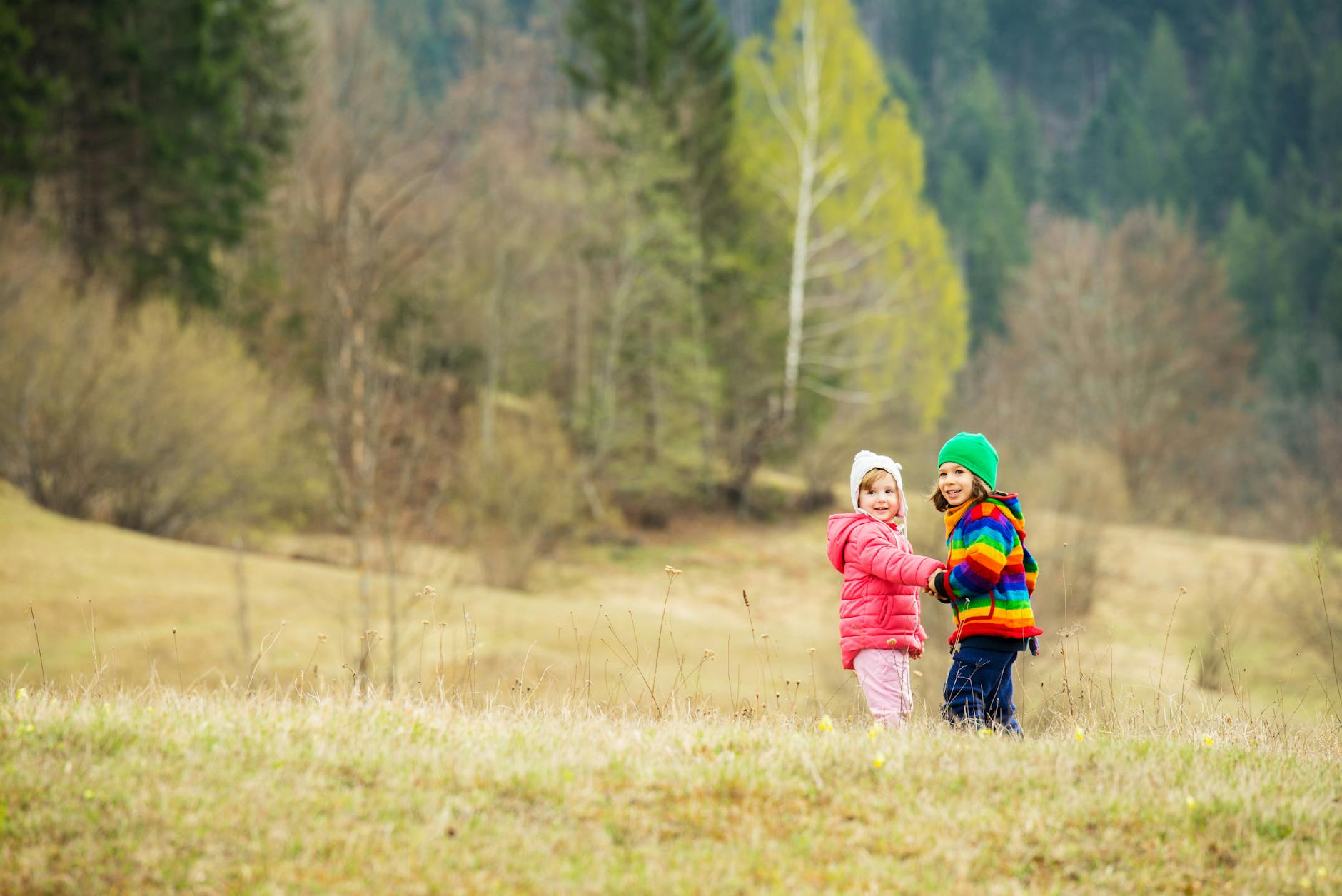
Getting kids genuinely excited about outdoor play requires giving them something specific to be excited about — not a vague directive to “go outside,” but a concrete activity with an immediately appealing payoff. The outdoor toys that create the strongest initial pull are the ones kids can pick up and start playing with in under 30 seconds, with enough novelty and physical satisfaction in the first 5 minutes to hook them for the next 45.
Quick Answer
Kids get genuinely excited about outdoor play when the alternative is more compelling than screens — and that only happens when there is something specific waiting for them outside. New outdoor toys (or rediscovered ones) create natural excitement spikes. Structured novelty (a new challenge, a first boomerang return attempt) sustains it.
Why Are Some Kids Naturally Reluctant to Go Outside?
Some children resist outdoor play not because they dislike being outside, but because the outdoor environment offers less immediate stimulation than screens — and without a compelling specific activity waiting, going outside feels like trading something rewarding for something undefined.
This is the key insight: reluctance is rarely about the outdoors. It is about the comparison. A tablet offers a predictable, immediately rewarding experience. “Go play outside” offers uncertainty. The solution is not to ban screens — it is to make the outdoor option more immediately compelling than the screen option for the first 5-10 minutes, which is the critical window.
Child psychologists call this “competing reinforcement” — the outdoor activity needs to compete with the immediate reward value of digital media. Simple active play toys with high novelty value (launching a foam rocket, throwing a boomerang for the first time) create exactly this competition because the first-experience payoff is genuinely exciting.
What Creates the “I Want to Go Outside” Pull in Kids?
The outdoor play activities that create the strongest intrinsic pull in children ages 3-12 involve novelty (something new to try), visible skill challenge (something to master), and a quick first-success moment that hooks them into wanting more.
The psychological sequence that drives genuine outdoor excitement:
- Novelty hook — a new toy, a new challenge, or a familiar toy used in a new way
- Immediate first success — the child succeeds at something within the first 2-3 minutes (the glider actually flies, the disc comes back, the rocket launches high)
- Desire to improve — the child sees how much better it could be with practice
- Intrinsic motivation loop — the child returns on their own the next day
This is why brand-new outdoor toys have a disproportionate effect on outdoor time. The novelty alone doubles or triples average outdoor session length in the first week, according to research on play engagement in early childhood (Hirsh-Pasek et al., 2009).
Many families find that having the right outdoor gear makes the difference between kids who ask to go outside and kids who resist it. Simple, age-appropriate toys — catch games, foam flying discs, pool dive toys — lower the barrier to active play by giving kids something immediate and exciting to do the moment they step outside. Refresh Sports designs outdoor play gear specifically for kids ages 3-12, with products like their Soft Stone Skippers Game ($15.97), Fun Flying Disc – Soft Frisbee ($13.97), and Toss and Catch Ball Game Set ($27.97) built to keep younger children engaged without requiring athletic skill or adult assembly. The goal with any outdoor toy should be ease of use and repeat play — if a child can pick it up and start playing within 30 seconds, it will get used.
Which Outdoor Toys Create the Strongest Initial Pull?
The outdoor toys that most reliably create an “I want to try that” reaction in children ages 5-12 are launch-and-chase toys, boomerangs, and foam rocket sets — all categories where the first use produces a visible, exciting physical outcome that the child immediately wants to repeat.
Ranked by initial excitement pull for reluctant outdoor players:
Tier 1 — Maximum novelty pull:
- Foam rocket launchers — watching a rocket arc 30-40 feet into the air is inherently surprising and exciting on first launch. The Slingshot Rocket Launcher – Foam Rockets ($19.87) from Refresh Sports delivers this on the very first pull.
- Foam boomerangs — the concept that a thrown object returns to you is cognitively surprising to young children. The Beach Boomerang Toy ($17.97) makes this accessible without requiring perfect technique.
Tier 2 — High engagement pull:
- Catch sets with novelty mechanics — velcro paddles and the satisfying rip of a caught ball produce a tactile reward that keeps kids in the rally loop
- Flying discs — the flight arc of a well-thrown foam disc is visually compelling and immediately motivating to repeat
Tier 3 — Sustained engagement (not initial pull):
- Sensory balls, lacrosse sticks, beach balls — these build engagement over time rather than creating immediate novelty excitement
How Do You Sustain Outdoor Excitement Beyond the First Day?
To sustain outdoor excitement after the initial novelty wears off, introduce a mastery challenge — a specific goal the child is working toward that makes each session slightly more meaningful than the last.
The most effective mastery challenges for sustaining outdoor motivation:
- Catch streak record — current personal best, displayed prominently (even just written on a chalkboard)
- Boomerang return distance — how close to the launch point can the boomerang land?
- Rocket height estimation — whose rocket flies highest, measured against a tree or fence
- Disc precision — throw at a target hoop or chalk circle from increasing distances
These challenges convert a toy from “something to do outside” into “something to get better at” — which is the difference between a three-day toy and a three-month toy.
The Bouncy Paddle & Stringy Ball Game ($24.97) from Refresh Sports has this built in through the rally mechanic: the catch streak is self-tracking, the goal is always to beat the last record, and both players are invested simultaneously.
What Happens When Kids Self-Motivate to Go Outside?
When a child starts initiating outdoor play on their own — asking to go outside rather than resisting the suggestion — it signals that the outdoor environment has become intrinsically rewarding. This shift typically takes 10-14 days of consistent daily outdoor time, during which the screen-free outdoor habit competes with and gradually wins against digital alternatives.
Research from Stanford’s Behavioral Design Lab (2018) found that habit formation requires three elements: a clear cue (the toy waiting at the back door), a routine (daily outdoor time at the same rough time), and a reward (a genuinely fun 20-minute play session). Once those three are in place, the parental push is no longer required — the child provides their own motivation.
The family play that starts as a parent-driven initiative almost always becomes child-initiated within two weeks when the right outdoor toys are part of the system.
References
- Hirsh-Pasek, K., et al. (2009). A mandate for playful learning in preschool. Oxford University Press.
- Fogg, B.J. (2019). Tiny habits: The small changes that change everything. Houghton Mifflin Harcourt.
- Gray, P. (2013). Free to learn: Why unleashing the instinct to play will make our children happier, more self-reliant, and better students for life. Basic Books.
- American Academy of Pediatrics. (2018). Physical Activity Guidelines. healthychildren.org.
- For outdoor activity inspiration and child development guides, visit raisethemoutdoors.com. For how to get kids to play outside resources and gear guides, see backyardplayguide.com.