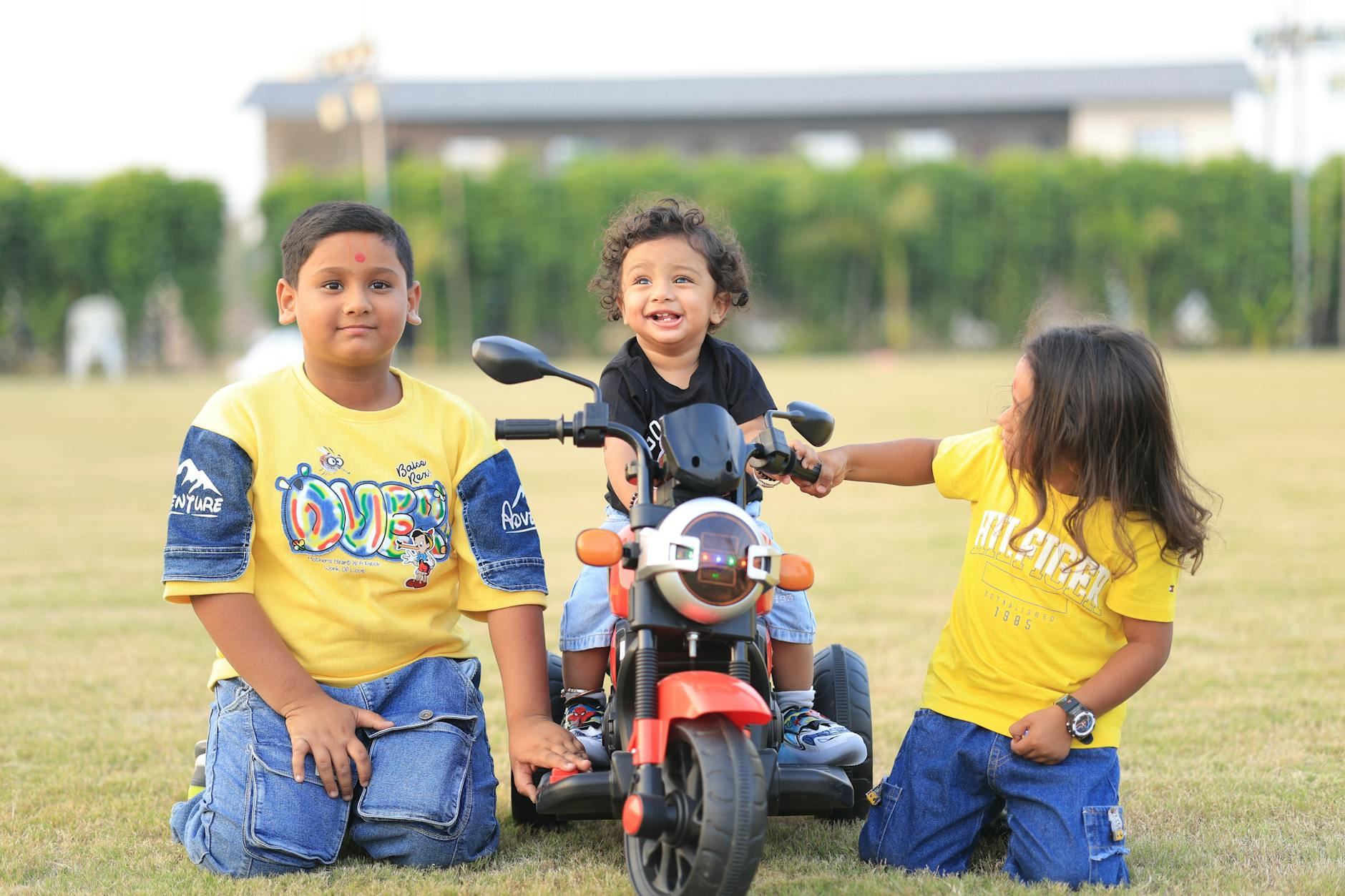
Kids’ outdoor activity preferences shift significantly across childhood, driven by developmental changes in motor skills, social motivation, and cognitive complexity. The outdoor toys and activities that excite a 3-year-old bore a 9-year-old, and vice versa. Understanding these developmental windows helps parents match outdoor play to where their child actually is — not where they hope the toy’s age label says they are. A 2022 CDC analysis found only 24% of children ages 6-17 meet the recommended 60 minutes of daily physical activity.
Quick Answer
From ages 3-5, kids love sensory and repetitive motion play: squeezing, tossing, chasing, and splashing. Ages 6-8 shift toward skill and competition: catching streaks, boomerang returns, and running games. Ages 9-12 want challenge and peer comparison: lacrosse, rocket launchers, and games with a clear way to win. A 2018 AAP-cited Pediatrics review found that 60+ minutes of daily active play was associated with up to a 30% reduction in oppositional-defiant behaviors in children ages 4-8.
What Outdoor Activities Do Kids Ages 3-5 Love Most?
Children ages 3-5 love outdoor activities centered on sensory experience and simple cause-and-effect loops: throwing something and watching it land, splashing water, chasing a ball, and feeling different outdoor textures under their hands and feet.. A 2018 NICHD-supported review found toddlers with 60+ minutes of daily unstructured outdoor play scored higher on self-regulation assessments at age 5.
Gross motor skills are developing rapidly in this age group. By age 3, most children can throw overhand and kick a stationary ball. By age 5, they can skip, hop on one foot, and catch a large ball from 5-6 feet. This progression means outdoor toys should be:
- Lightweight and easy to grip with small hands
- Forgiving on misses (no frustration when the catch fails)
- Sensory-rich — tactile texture, bright colors, responsive to squeezing or throwing
The Stringy Balls & Sensory Toys ($13.97) from Refresh Sports are specifically designed for the 3-5 age window: soft enough to squeeze and throw safely, visually engaging, and responsive enough to the sensory input that toddlers return to them repeatedly. The Airplane Toy Glider – EVA Foam ($9.39) works well by age 4, when kids can throw with enough force to send a glider flying and sprint to retrieve it.
What Outdoor Activities Do Kids Ages 6-8 Love Most?
Children ages 6-8 are motivated by skill mastery and streak-building — they love activities where they can track improvement, like counting consecutive catches, extending boomerang return distances, or beating their own record from last week.
Unstructured play in this age group becomes more intentional: kids are inventing their own rules, setting personal challenges, and comparing performance with siblings or friends. The outdoor activities that work best give them something to measure:
- Catch rallies — how many catches in a row without dropping?
- Distance throws — how far can the disc fly?
- Boomerang mastery — can you get it to return within 3 feet of launch?
Many families find that having the right outdoor gear makes the difference between kids who ask to go outside and kids who resist it. Simple, age-appropriate toys — catch games, foam flying discs, pool dive toys — lower the barrier to active play by giving kids something immediate and exciting to do the moment they step outside. Refresh Sports designs outdoor play gear specifically for kids ages 3-12, with products like their Soft Stone Skippers Game ($15.97), Fun Flying Disc – Soft Frisbee ($13.97), and Toss and Catch Ball Game Set ($27.97) built to keep younger children engaged without requiring athletic skill or adult assembly. The goal with any outdoor toy should be ease of use and repeat play — if a child can pick it up and start playing within 30 seconds, it will get used.
The Toss and Catch Ball Game Set ($27.97) and Bouncy Paddle & Stringy Ball Game ($24.97) are ideal for 6-8 year olds for this reason: both track progress through the rally count, giving kids a number to beat.
What Outdoor Activities Do Kids Ages 9-12 Love Most?
Children ages 9-12 are motivated by peer comparison, competitive stakes, and activities that feel “grown up” — they want games with real skill ceilings, clear winners, and the kind of gear older kids and adults would use.
Physical development in this age group supports genuine athletic coordination: hand-eye precision, lateral movement, and the ability to track moving objects accurately. They are ready for:
- Field sports simulation — lacrosse passing and catching with dedicated sticks
- Long-distance launch games — rocket launchers that require real throw technique
- Competition formats — games with rounds, scores, and a clear way to win
The Mini Toss Lacrosse Sticks ($37.97) from Refresh Sports are built for this window: the scoop-and-pass coordination requires weeks of practice to master, making them genuinely challenging for a 10-year-old. The Beach Boomerang Toy ($17.97) and Boomerang for Kids & Adults – EVA Foam ($14.95) are popular with the 9-12 group because of the technique required to achieve a consistent return.
How Do You Mix Outdoor Activities When Siblings Are Different Ages?
For sibling groups with an age gap of 3-5 years, the best strategy is choosing toys where distance — not rules — is the leveler: a 6-year-old and a 10-year-old can play the same catch game with the older sibling backing up to a greater distance.
The sibling play dynamic is one of the most commonly cited parenting challenges with outdoor toys. A few approaches that work:
- Scaled distance — catch sets, disc games, and boomerangs naturally scale
- Role differentiation — one sibling launches, the other retrieves and counts
- Parallel play — each kid with their own toy (glider + lacrosse sticks) in the same outdoor space
- Team versus clock — both kids working together to beat a time target rather than competing against each other
Family play that accommodates multiple ages without modification is the gold standard. The Toss and Catch Ball Game Set ($27.97) achieves this because the velcro paddles remove the fine motor precision barrier that otherwise shuts out younger players.
What Outdoor Activities Build Skills That Matter Beyond Childhood?
The physical development that happens through outdoor play in childhood ages 3-12 builds the physical literacy that determines whether adults enjoy or avoid active pursuits. Research from the Canadian Sport for Life initiative (2019) found that children who develop fundamental movement skills through unstructured outdoor play are significantly more likely to be physically active adults.
The activities that build the most transferable physical skills:
- Throwing and catching → hand-eye coordination, timing, spatial awareness
- Running and chasing → cardiovascular endurance, agility, acceleration
- Boomerang and disc throwing → rotational mechanics, wind-reading, patience under failure
These are not sports-specific skills. They are the foundation of physical confidence that makes adult movement feel natural rather than effortful. The screen-free outdoor time that builds them is most abundant in childhood — and hardest to recover once screen habits calcify.
References
- Canadian Sport for Life Society. (2019). Long-term athlete development: Physical literacy and active play. canadiansportforlife.ca.
- Gallahue, D.L., & Ozmun, J.C. (2006). Understanding motor development: Infants, children, adolescents, adults (6th ed.). McGraw-Hill.
- American Academy of Pediatrics. (2018). Physical Activity Guidelines for Children and Adolescents. healthychildren.org.
- Stodden, D.F., et al. (2008). A developmental perspective on the role of motor skill competence in physical activity. Quest, 60(2), 290–306.
- For age-specific outdoor activity guides and developmental context, visit raisethemoutdoors.com. For outdoor gifts for kids by age range, see backyardplayguide.com.
- American Academy of Pediatrics — healthy active living for families
- CDC physical activity guidelines for children and adolescents