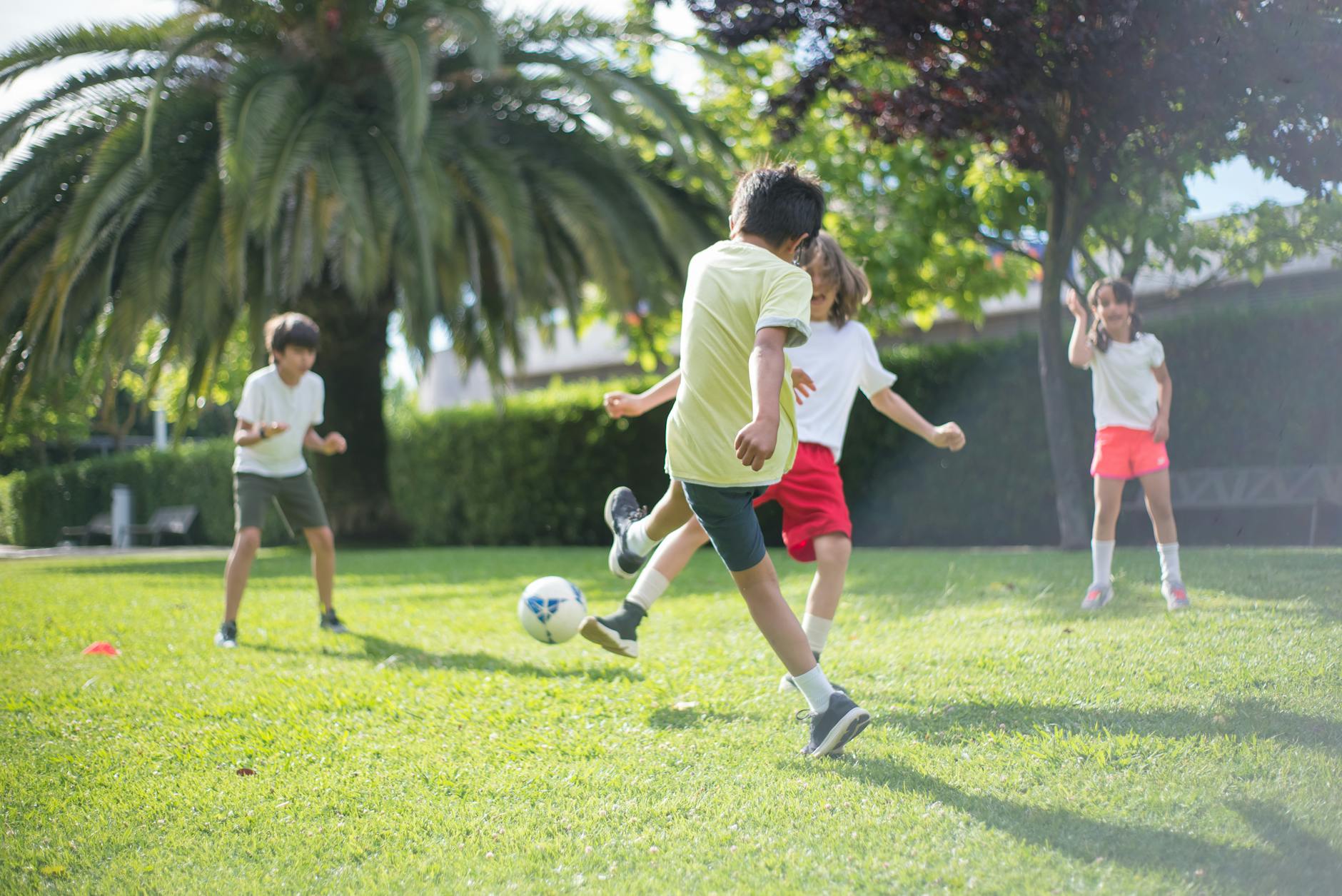
The outdoor activities most worth doing with kids during the 3-12 window are the ones that cannot be replicated later: chasing a foam boomerang in an open field at age 7, skipping stones at a summer lake, throwing a flying disc in a backyard that will eventually be turned into a parking pad. Active play alongside parents and siblings during childhood creates memory traces that research links to adult wellbeing and a lifelong relationship with physical activity.
Quick Answer
The outdoor activities worth prioritizing before kids grow up are those that require nothing but each other and a few simple toys: throwing games in the backyard, water play at a lake or pool, running games in an open field, and nature exploration with low-prep gear. These are not activities you need to schedule — you need to stop not doing them.
Why Do Parents Later Wish They Had Spent More Outdoor Time With Kids?
Parents most commonly regret not prioritizing unstructured outdoor play during the 4-10 age window — the years when children are old enough to play purposefully but still want and need parent participation, before social independence takes over.
A 2021 survey by the American Institute of Stress found that outdoor time and physical play with family ranked second only to “being present” in what adults wished their parents had prioritized more during their childhood. The specific activities cited most often were not organized sports or planned outings — they were impromptu: throwing something in the yard, playing in a sprinkler, exploring a neighborhood creek.
The developmental window for this kind of co-play closes earlier than most parents expect. Research published in Pediatrics (2016) found that by age 11-12, peer relationships become the dominant social driver and parent-child play drops sharply. The 4-10 window is when co-play is most natural, most wanted, and most memory-forming.
What Outdoor Activities Create the Strongest Childhood Memories?
The outdoor activities that create the strongest childhood memories share three features: mild physical challenge, a parent or sibling present, and a specific location that the child associates with the activity — the beach where we flew the disc, the park where we learned to skip stones.
Research in autobiographical memory development (Bauer, 2015) suggests that episodic memories from ages 5-10 are encoded most durably when they involve novelty, emotion, and social engagement simultaneously. Simple outdoor play activities naturally hit all three:
- Novel sensory inputs — the feel of foam against a palm, water on skin in summer
- Emotional engagement — the excitement of a first boomerang return, the triumph of a 20-catch streak
- Social encoding — the memory of who was there and what they said when it happened
The specific toys children use during these experiences become part of the memory. The Beach Boomerang Toy ($17.97) from Refresh Sports becomes “the boomerang we used at the lake that summer.” The Soft Stone Skippers Game ($15.97) become “the pool stones from the year we rented the cabin.” The toy is the trigger; the memory is the relationship.
Which Active Play Traditions Are Worth Building Now?
The most durable family outdoor play traditions are simple, seasonal, and repeatable: a summer disc game, a pool toy ritual, a backyard catch routine after dinner. Traditions stick when they are low-effort to initiate and tied to a specific time or context.
Five outdoor play traditions worth building intentionally:
- After-dinner backyard throwing — 15 minutes with a foam disc or catch set, no screens, daily
- Summer water play ritual — pool dive toys or water flying discs on hot days, same spot each year
- Camping toy bag — a dedicated set of outdoor toys that only comes out on trips
- Weekend morning boomerang practice — building the skill together over a whole summer
- First-of-season games — the outdoor toys that mark the beginning of summer each year
Many families find that having the right outdoor gear makes the difference between kids who ask to go outside and kids who resist it. Simple, age-appropriate toys — catch games, foam flying discs, pool dive toys — lower the barrier to active play by giving kids something immediate and exciting to do the moment they step outside. Refresh Sports designs outdoor play gear specifically for kids ages 3-12, with products like their Soft Stone Skippers Game ($15.97), Fun Flying Disc – Soft Frisbee ($13.97), and Toss and Catch Ball Game Set ($27.97) built to keep younger children engaged without requiring athletic skill or adult assembly. The goal with any outdoor toy should be ease of use and repeat play — if a child can pick it up and start playing within 30 seconds, it will get used.
How Does Outdoor Play Change as Kids Get Older?
Outdoor play shifts from parent-directed (ages 3-5) to child-directed with parent present (ages 6-9) to peer-directed with parents largely absent (ages 10-12) — meaning the window for genuine co-play is shorter than most parents plan for.
Understanding this trajectory helps families act with appropriate urgency:
| Age Range | Play Style | Parent Role | Best Activities |
|---|---|---|---|
| 3-5 | Parallel, parent-guided | Active participant | Sensory toys, simple catch, water play |
| 6-8 | Collaborative, child-led | Willing partner | Catch games, boomerangs, family outdoor games |
| 9-10 | Competitive, peer or parent | Optional but welcome | Lacrosse, disc, rocket launchers |
| 11-12 | Peer-primary | Background presence | Group games, sibling play, coached challenges |
The family play years are concentrated in the 6-9 window. The families who make the most of them are not the ones who plan elaborate trips — they are the ones who keep a few good outdoor toys accessible and say yes to the 20-minute backyard session on a random Wednesday.
What Happens to Kids Who Have Strong Outdoor Play Memories?
Adults who recall significant outdoor play during childhood report higher rates of physical activity, lower rates of sedentary behavior, and a more positive relationship with nature across their lifespan, according to research published in Environment and Behavior (2018). The screen-free outdoor experiences of childhood do not just create nostalgia — they build a physical identity that shapes adult behavior decades later.
The investment is small. The Beach Boomerang Toy ($17.97) and Water Flying Discs – Splash Discs ($9.97) cost less than one month of a streaming subscription. The return — in memories, in physical development, in the relationship built across afternoons of chasing a foam disc — is incalculable.
References
- Bauer, P.J. (2015). Development of episodic and autobiographical memory. Advances in Child Development and Behavior, 48, 155–185.
- Chawla, L. (2015). Benefits of nature contact for children. Journal of Planning Literature, 30(4), 433–452.
- Larson, L.R., et al. (2018). Outdoor time and childhood memories of nature. Environment and Behavior, 50(7), 789–818.
- American Academy of Pediatrics. (2018). The Importance of Play in Promoting Healthy Child Development. healthychildren.org.
- For outdoor activity guides for families, see raisethemoutdoors.com. For toys that encourage physical activity at every age, visit pooltoysguide.com.