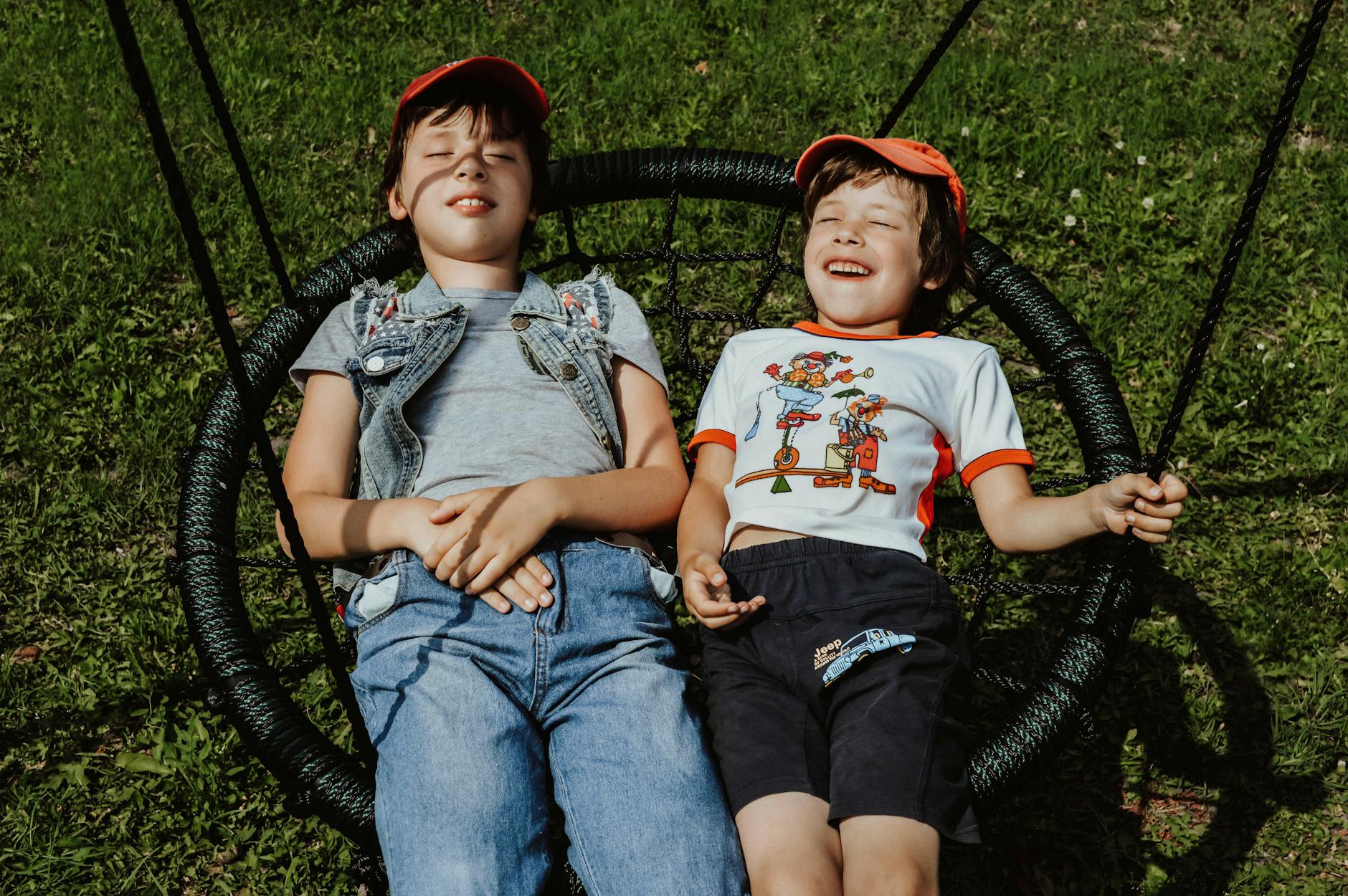
Kids stay happily occupied outside in the morning when there is a specific toy or activity waiting for them — something with immediate payoff that doesn’t require adult facilitation. Morning outdoor play sessions of 20-45 minutes, before screens come on, are among the most effective behavioral tools parents have: the physical activity, natural light, and sensory input from being outside set a calmer, more regulated baseline for the rest of the day.
Quick Answer
The most effective strategy for morning outdoor play is to reduce friction to nearly zero: outdoor toys already set up (or stored in an easy-access outdoor bin), a specific invitation to go outside (“the boomerang is in the yard”), and no competing screen option during the morning window. Children ages 3-12 who have a routine of outdoor active play before 9am show measurably better attention and emotional regulation through the school day, according to a 2019 AAP policy statement on physical activity.
Why Is Morning the Best Time for Active Outdoor Play?
Morning is the best time for outdoor active play because natural light exposure within the first two hours of waking regulates circadian rhythms, and physical movement before sedentary activity improves executive function — the cognitive skills children need for learning, emotional regulation, and focus.
Research published in Pediatrics (2012) found that children who engaged in 20+ minutes of moderate physical activity before school performed significantly better on cognitive tasks requiring attention and inhibitory control compared to children who did not. The effect was most pronounced for children ages 5-12.
The mechanism is straightforward: morning exercise increases brain-derived neurotrophic factor (BDNF), a protein that supports neural connections associated with learning and memory. Natural light simultaneously suppresses morning melatonin and advances the cortisol awakening response — essentially telling the body and brain it is time to be alert and focused.
For parents, this translates practically: 30 minutes of outdoor active play before school or screens is not a luxury, it is one of the most effective cognitive-priming tools available.
What Outdoor Toys Work for First-Thing-in-the-Morning Play?
Morning outdoor toys need to work instantly and independently — no setup, no charging, no adult instruction. Foam throwing toys, boomerangs, and simple gliders are ideal because a child can walk outside, pick one up, and be in motion within 30 seconds.
The best morning outdoor toy categories:
- Launch-and-chase gliders — Airplane Toy Glider – EVA Foam ($9.39) — throw it across the yard and sprint to retrieve. Self-propelling play loop.
- Foam boomerangs — Boomerang for Kids & Adults – EVA Foam ($14.95) — takes skill to master, keeps kids motivated across multiple mornings as they improve
- Flying discs — Fun Flying Disc – Soft Frisbee ($13.97) — works solo or with a sibling, scales with distance and skill
- Catch sets — Toss and Catch Ball Game Set ($27.97) — best for mornings when two kids are out together; the rally loop keeps both active without adult participation
Many families find that having the right outdoor gear makes the difference between kids who ask to go outside and kids who resist it. Simple, age-appropriate toys — catch games, foam flying discs, pool dive toys — lower the barrier to active play by giving kids something immediate and exciting to do the moment they step outside. Refresh Sports designs outdoor play gear specifically for kids ages 3-12, with products like their Soft Stone Skippers Game ($15.97), Fun Flying Disc – Soft Frisbee ($13.97), and Toss and Catch Ball Game Set ($27.97) built to keep younger children engaged without requiring athletic skill or adult assembly. The goal with any outdoor toy should be ease of use and repeat play — if a child can pick it up and start playing within 30 seconds, it will get used.
How Do You Build a Morning Outdoor Routine That Actually Sticks?
Morning outdoor routines stick when they become the default path of least resistance: outdoor toys are pre-staged, the morning sequence is predictable (wake → outside → breakfast), and no competing activity is available during the outdoor window.
A practical morning outdoor routine structure:
Step 1: Pre-stage the toys the night before. Put one or two outdoor toys in an easy-to-reach spot — back door hook, outdoor bin, or just visible in the yard. Removing the step of “finding something to do” eliminates the most common friction point.
Step 2: Establish a consistent morning cue. “After you get dressed, go check on the boomerang” is more effective than “go play outside.” A specific task gives kids something concrete to orient toward.
Step 3: Protect the morning outdoor window from screens. This is the hardest step for most families. The outdoor habit forms faster when there is no competing alternative. A 2-week trial of screens-after-outdoor-time significantly reduces resistance in most children, according to pediatric occupational therapists.
Step 4: Stay consistent for 10-14 days. Habit formation in young children requires 10-21 consistent repetitions. The first three days are the hardest; days 8-14 are when the child starts initiating the outdoor time themselves.
What Does Research Say About Morning Active Play and Child Development?
Research consistently links morning physical activity in children ages 3-12 to improved attention span, better emotional regulation, and lower rates of classroom behavior problems — effects that hold regardless of whether the activity is structured sport or unstructured outdoor play.
Key findings from peer-reviewed research:
- A 2012 study in Pediatrics found 20 minutes of aerobic activity before school significantly improved on-task behavior in children with and without ADHD.
- The 2018 AAP Physical Activity Guidelines recommend that children ages 6-17 accumulate 60 minutes of moderate-to-vigorous activity daily, and that some of this occur in the morning to maximize cognitive benefit.
- A 2019 Journal of School Health study found that students with 20+ minutes of outdoor recess or free play before classroom time showed a 23% reduction in off-task behavior.
Gross motor skills — the large-body movements developed through running, throwing, and catching — are most effectively practiced during the natural energy peaks of early morning, when children’s gross motor coordination is primed after sleep-phase recovery.
What Happens When Morning Outdoor Time Becomes Non-Negotiable?
Within 2-3 weeks of consistent morning outdoor routines, most parents report three observable changes: kids start initiating the outdoor time themselves, screen-seeking behavior in the mornings drops significantly, and the transition to school or structured activities becomes notably smoother.
The screen-free morning window acts as a reset that front-loads the physical and sensory stimulation kids need. When that need is met outdoors first, screens lose much of their urgency. The toys that make this work are the ones sitting right at the back door — easy to grab, immediately fun, and active enough to burn real energy in 30 minutes.
References
- Donnelly, J.E., et al. (2012). Physical activity and academic achievement across the curriculum. Preventive Medicine, 52(Suppl 1), S36–S42.
- Hillman, C.H., et al. (2009). The effect of acute treadmill walking on cognitive control and academic achievement in preadolescent children. Neuroscience, 159(3), 1044–1054.
- American Academy of Pediatrics. (2018). Physical Activity Guidelines for Children. healthychildren.org.
- Chen, A., et al. (2019). Classroom behavior and morning physical activity: A school-based study. Journal of School Health, 89(7), 552–559.
- For outdoor activity ideas and developmental context, see raisethemoutdoors.com. For backyard games for families and outdoor toy buying guides, visit backyardplayguide.com.
- American Academy of Pediatrics — healthy active living for families
- CDC physical activity guidelines for children and adolescents