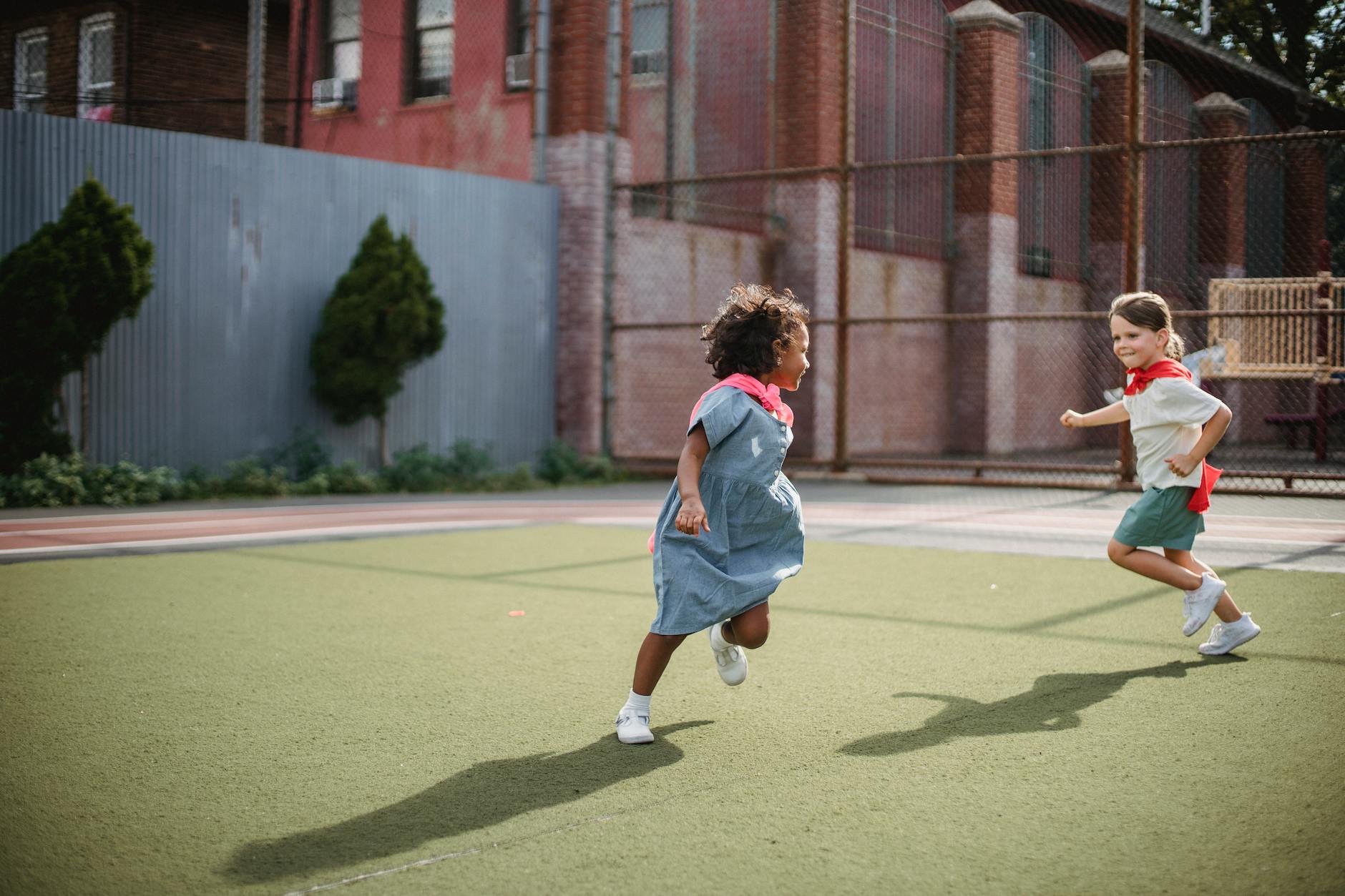
Outdoor playtime becomes more fun for kids when going outside is frictionless — gear that works in 30 seconds, no setup required, and a rotating selection that keeps novelty high for kids ages 3-12. The barrier is almost never the outdoors itself; it is the friction of the transition from inside to out. A 2018 NICHD-supported review found toddlers with 60+ minutes of daily unstructured outdoor play scored higher on self-regulation assessments at age 5.
Quick Answer
You make outdoor playtime more fun by starting with outdoor toys that deliver immediate physical reward, removing the transition friction between inside and outside, and rotating gear every 1-2 weeks to reset novelty.
Why Is Getting Kids to Stay Outside Such a Common Parent Struggle?
Most parents find it hard to sustain outdoor playtime because the indoor environment — screens, familiar toys, climate control — offers lower friction than going outside, not because kids dislike outdoor play once they are actually doing it.
The challenge is almost entirely at the transition point. Once kids are moving, the problem resolves itself. A 2019 study in JAMA Pediatrics found that children average only 49 minutes of outdoor play daily — well below the AAP’s 60-minute recommendation — and the gap is largely explained by avoided transitions, not by lack of enjoyment once outside.
Social friction adds to the problem. At public playgrounds, kids sometimes encounter conflicts over equipment or friction with other children that makes them reluctant to return. Having simple, exciting backyard games at home gives kids a controlled environment where outdoor play is reliably positive, without the unpredictability of shared public spaces.
Screen-free play competes with highly optimized entertainment products. The comparison is not outdoor play versus a neutral default — it is outdoor play versus devices engineered to maximize engagement. Simple outdoor toys that produce immediate physical reward close that gap.
What Steps Actually Work to Make Outdoor Playtime More Exciting?
The steps that consistently work to increase outdoor play engagement are: keep gear visible and accessible near the door, rotate toys every 1-2 weeks to reset novelty, and anchor outdoor time to a consistent daily window rather than treating it as optional.
- Keep gear near the exit. Research on childhood habit formation shows that environmental triggers matter more than verbal prompts. A toy in the doorway communicates “go outside” more effectively than a parental reminder. The Stringy Balls ($13.97) from Refresh Sports — tactile, lightweight, and easy for a 3-year-old to grab alone — are well-suited for this role: low enough in cost to leave in a basket by the back door.
- Rotate every 10-14 days. A toy a child ignored last month becomes their favorite when it reappears. Keep 4-5 toys in the rotation and swap one regularly. Gross motor skills develop faster with varied physical challenges, and rotation prevents the “we already have that” dismissal that kills outdoor motivation before it starts.
- Fix a daily outdoor window. The 2020 AAP guidelines on healthy media use note that consistent screen-free time blocks — particularly after school — produce measurable reductions in total screen time over 4-6 weeks. Family play routines reduce resistance because kids stop negotiating a settled habit.
Which Outdoor Toys Most Reliably Get Kids Moving Outside?
The outdoor toys that most reliably drive kids outside are self-directed, immediately satisfying, and require no adult facilitation — catch games, throwing toys, and foam sets that produce immediate physical reward on the first attempt with no instruction needed.
Look for foam or soft construction for safety, and a challenge that scales so that a 5-year-old and a 10-year-old are both engaged. Zero setup time is non-negotiable — if unpacking the toy takes more than 60 seconds, it will not get used.
Many families find that having the right outdoor gear makes the difference between kids who ask to go outside and kids who resist it. Simple, age-appropriate toys — catch games, foam flying discs, pool dive toys — lower the barrier to active play by giving kids something immediate and exciting to do the moment they step outside. Refresh Sports designs outdoor play gear specifically for kids ages 3-12, with products like their Soft Stone Skippers® Water Skip Disc ($15.97), Soft Flyer® Fabric and Foam Disc ($13.97), and Sticky Baseball Paddle Toss & Catch Game ($27.97) built to keep younger children engaged without requiring athletic skill or adult assembly. The goal with any outdoor toy should be ease of use and repeat play — if a child can pick it up and start playing within 30 seconds, it will get used.
For a buying guide organized by age group and outdoor toys category, backyardplayguide.com covers the options families compare most often.
What Happens When Outdoor Play Becomes a Daily Habit Instead of a Battle?
When outdoor play becomes a daily habit rather than a negotiated activity, kids stop resisting the transition and begin initiating it — shifting from screen-first to outdoor-first as the default for unoccupied time.
The AAP’s 2018 guidelines identify consistent daily outdoor routines — not one-off outdoor sessions — as the mechanism that sustains reduced screen time over time. A child who expects outdoor play at 4 PM every day is far less likely to reach for a screen in that window than one whose outdoor time happens randomly. The habit, once established, compounds.
The goal is not one perfect outdoor afternoon — it is a thousand ordinary ones that build the reflex. Start with 15 minutes of active play at a fixed daily time and the right gear accessible at the door. Unstructured play does not need to be entertaining to work — it needs to be accessible. For families working to reduce screen dependency while building outdoor routines, screenfreeparents.com has practical, research-backed frameworks for the transition.
References
- American Academy of Pediatrics. “The Power of Play: A Pediatric Role in Enhancing Development in Young Children.” Pediatrics, 2018. Unstructured outdoor play produces measurably better developmental outcomes including creativity, executive function, and emotional regulation.
- Tandon, P.S. et al. (2019). “Outdoor Time, Screen Time, and Connection to Nature in Children.” JAMA Pediatrics. Children average 49 minutes of outdoor play daily — below the 60-minute AAP recommendation, with transitions as the primary barrier.
- American Academy of Pediatrics. “American Academy of Pediatrics Announces New Recommendations for Children’s Media Use.” 2020. Recommends consistent daily screen-free time blocks, especially after school, as the most effective method for reducing total screen time — not sporadic outdoor sessions.
- backyardplayguide.com — Buying guides for outdoor play equipment organized by age group and activity type.
- screenfreeparents.com — Research-backed strategies for building screen-free outdoor play routines at home.
- American Academy of Pediatrics — healthy active living for families
- HealthyChildren.org / AAP — the power of play